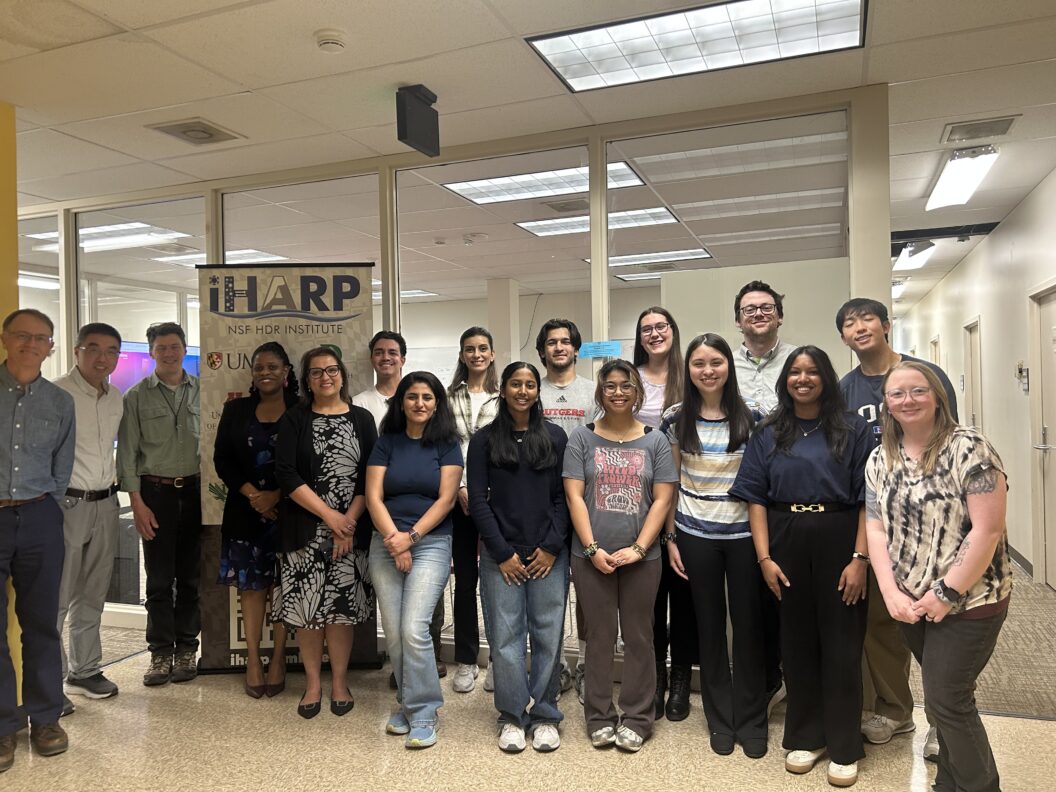

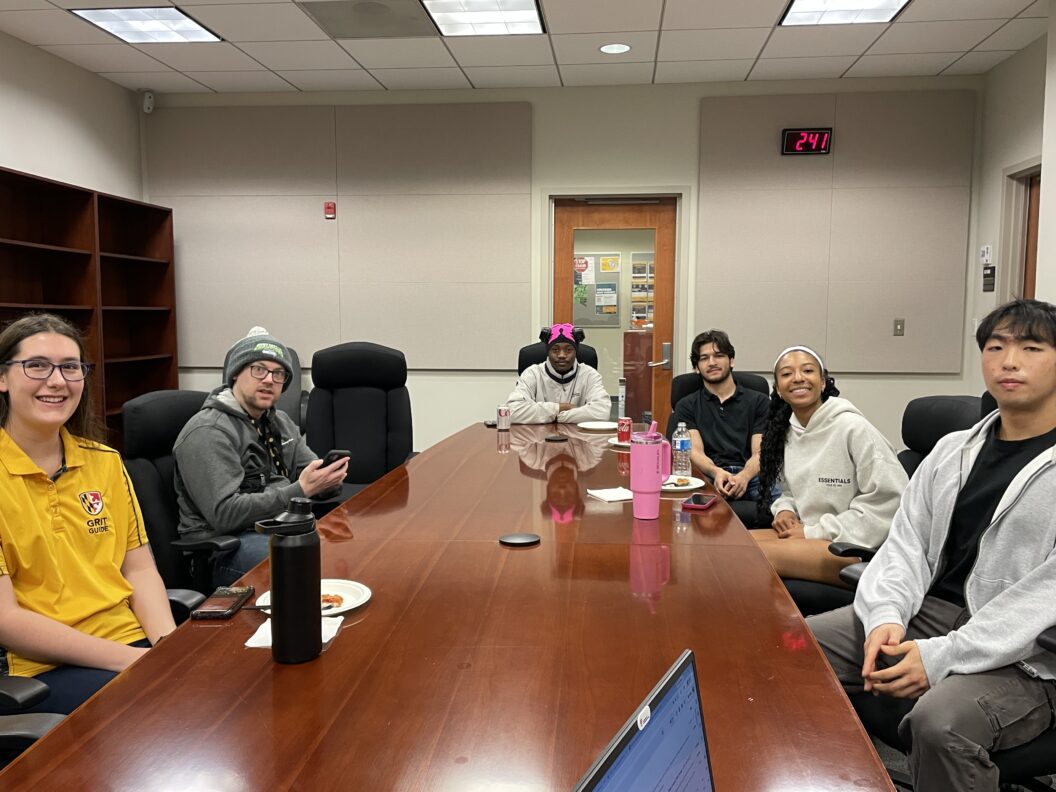


UMBC offers research and training programs that prepare students to apply data science, artificial intelligence, and advanced computing to real-world challenges. Through interdisciplinary collaboration, mentorship, and hands-on research opportunities, these programs support students at different stages of their academic journey, from high school to undergraduate and doctoral levels.
The programs below highlight two initiatives supported by the National Science Foundation, each designed to build technical expertise, foster collaboration, and expand the impact of data-driven research across disciplines.
DS & AI Program
The Data Science and AI Scholars program provides undergraduate and high school students with hands-on opportunities to explore data science and AI in real research and educational settings. Scholars work with faculty mentors across disciplines while building technical skills, professional experience, and a strong peer network.
The Data Science and AI Scholars program is funded by a National Science Foundation grant (Award #1915714), Undergraduate Data Science Education at Scale, a partnership between UC Berkeley, UMBC, and Mills College.
Scholars work within thematic areas connected to related NSF-funded projects, including the iHARP Project, the Information Augmentation Project, and the SCIPE project. In addition to research, scholars serve as peer mentors for foundational data science courses and participate in a cohort-based community through the Center for Women in Technology (CWIT) and the Center for Social Science Scholarship (CS3).
UM-CIP Program
The UM-CIP Graduate Fellows program provides doctoral students with opportunities to integrate advanced computational methods into their dissertation research. Fellows work with faculty advisors and Cyber Infrastructure Professionals (CIPs) to expand their expertise in high-performance computing (HPC), artificial intelligence, and large-scale data analysis while advancing research in Earth and Environmental Science.
The fellowship supports students who are interested in incorporating advanced computing into their work and gaining hands-on experience with research cyberinfrastructure. Through mentorship and collaboration, fellows develop the technical skills needed to address increasingly data-intensive scientific